
Size
- Workers: approx. 2 to 3 cm
- Queen: up to 3–3.5 cm
Larger than a wasp, but generally smaller and slimmer than the European hornet.
A simple public guide
The Asian hornet (Vespa velutina) is an invasive species that continues to spread across Europe and Belgium. It represents a significant threat to honeybees and other pollinators.
Learning to identify it helps to:
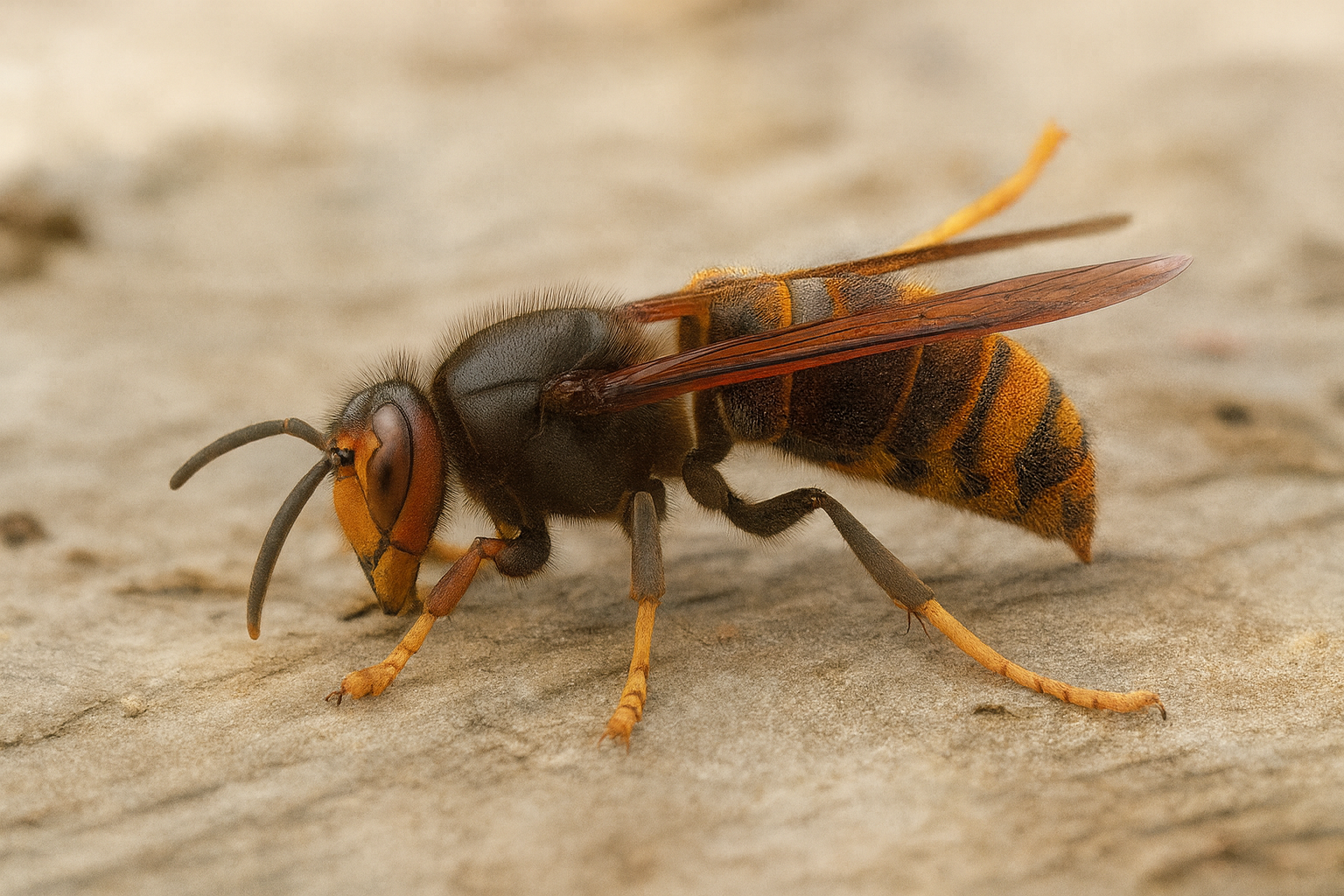
Asian hornet (Vespa velutina) – dark body, orange band on the abdomen, yellow leg tips.
The Asian hornet is mainly recognised by its dark colours, its orange band on the abdomen and its yellow legs. The cards below summarise the most reliable features.
Larger than a wasp, but generally smaller and slimmer than the European hornet.
Overall darker than the European hornet (bright yellow abdomen).
One of the best clues to confirm the presence of an Asian hornet.
Systematic predation of bees in front of hives is characteristic.
Two hornet species can be observed in Belgium: the Asian hornet and the European hornet, a protected local species. The visual below summarises the most important differences to remember.

Left: Asian hornets (dark bodies, yellow legs). Right: European hornets (lighter, bright yellow abdomen).
General appearance: dark body, orange band on the abdomen, yellow legs.
Remember: dark abdomen + clear orange band + yellow leg tips.
General appearance: lighter, yellow abdomen with black markings, more massive.
Remember: lighter colour, bright yellow abdomen, important ecological role.
Asian hornet nests are built from “papier-mâché” made from wood fibres. Their appearance changes throughout the season.
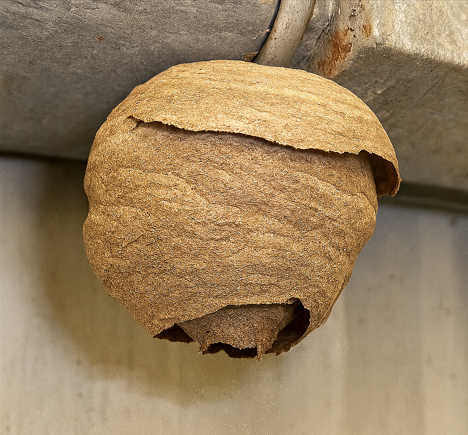
Primary nest, often under shelter (garage, roof edge, shed…).
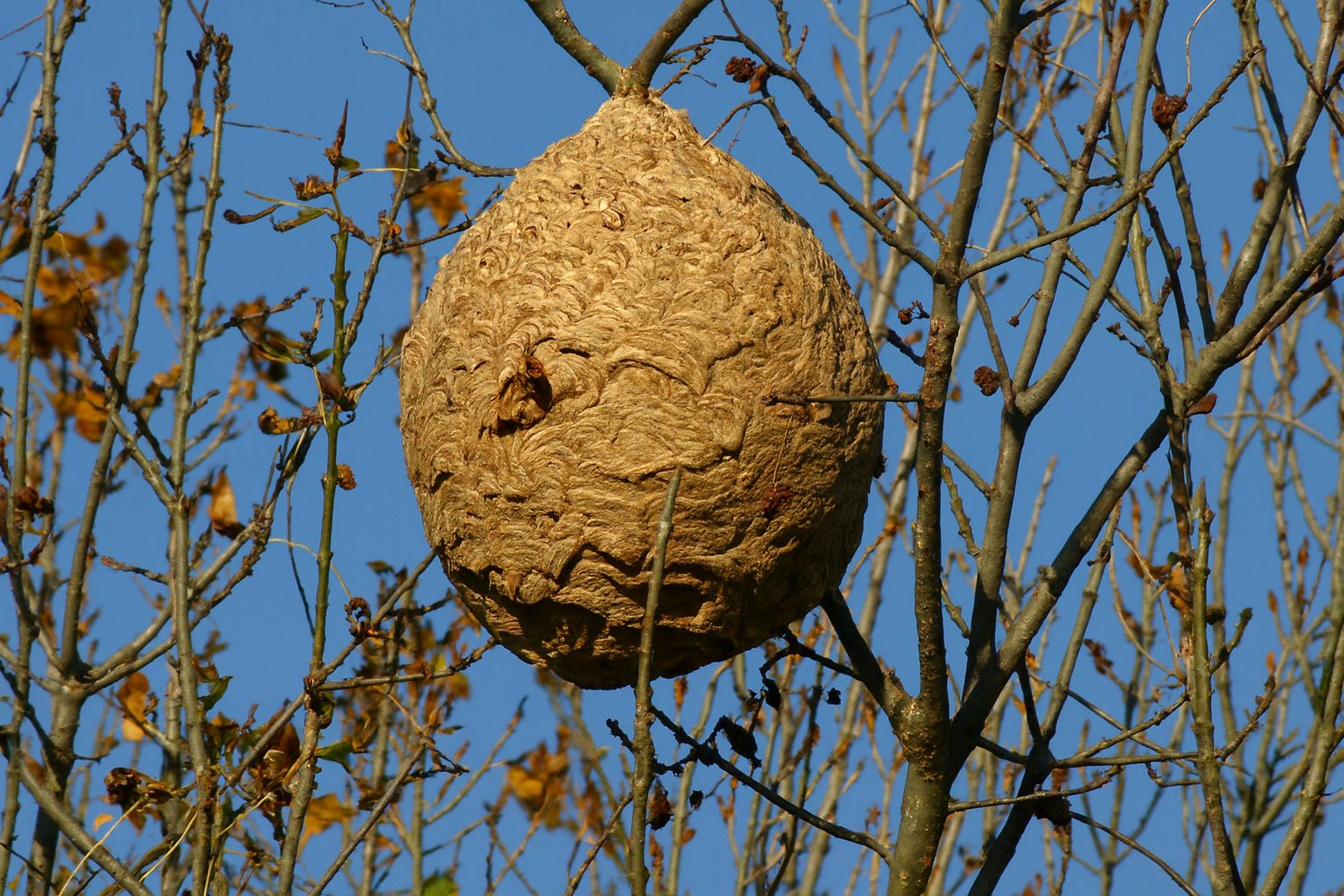
Secondary nest, often high in trees or on buildings.